
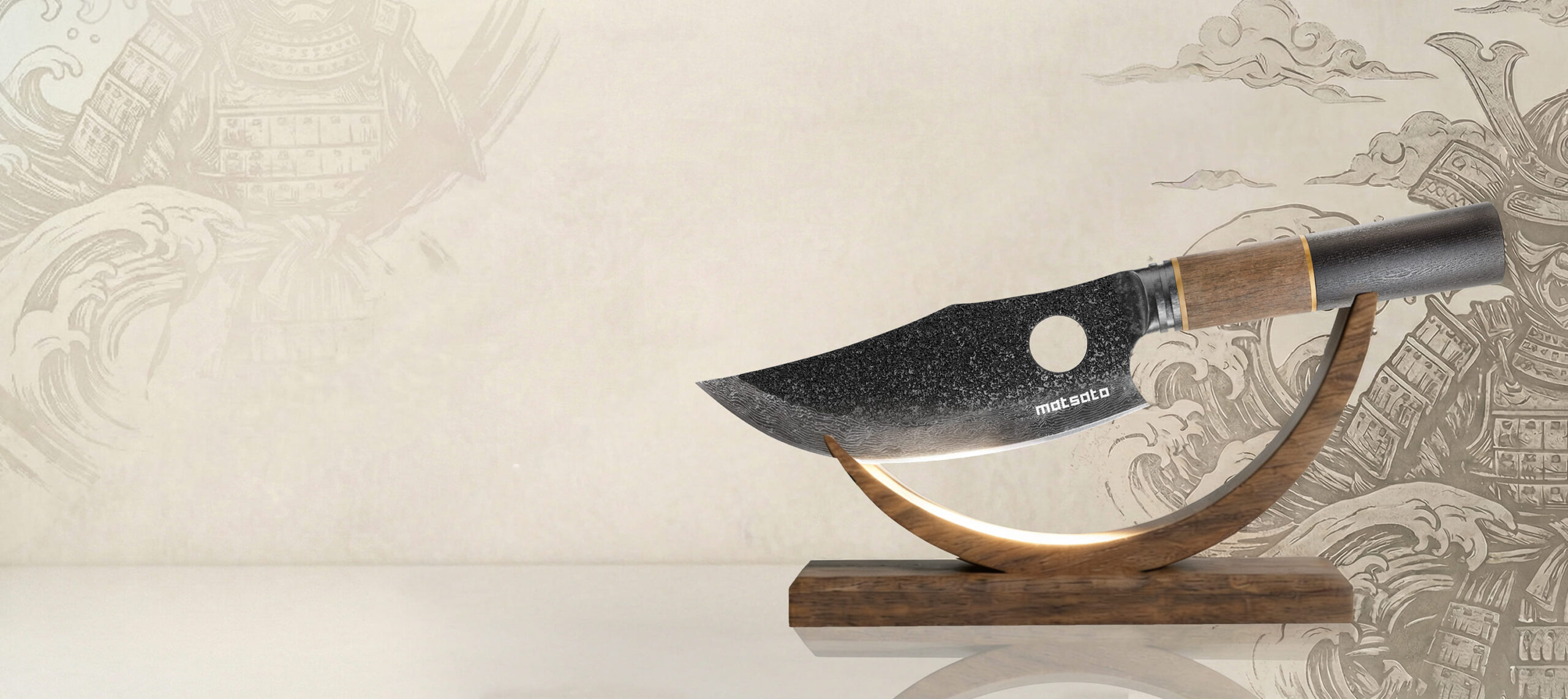
Matsato Knife Review 2026: How Sharp, How Sturdy and How Comfortable Is the Osuren Chef Knife With the Finger Hole? Test, Price & Honest Verdict
A dull knife turns cooking into a chore: tomatoes get squashed instead of sliced, onions skid across the board, and the steak you paid good money for ends up ragged. The Matsato Osuren promises the opposite – in the vendor’s words, “Finally: A Kitchen Knife That Stays Sharp”: a wide, hammered chef knife with a precision hole for your index finger, ice-hardened stainless steel and a two-tone pakka and acacia wood handle. It is one of the most searched kitchen knives online right now – as “Matsato knife”, “Matsato Osuren knife”, “Matsato chef knife” or “Matsato kitchen knife”, and often misspelled as “Masato knife”, “Matsuto knife” or “Matsata knife”. For this Matsato knife review, three home cooks used the Osuren for four weeks in two kitchens: sharpness out of the box, cutting tests on vegetables, meat, fish and bread, comfort with and without the finger hole, edge retention and care – plus the real prices from the official checkout, the shipping and refund terms and the company behind the brand.
- 🏆 Our verdict: Matsato Osuren knife – 8.4/10, very good. Chef knife with a wide, slightly curved, hammered stainless-steel blade, a precision hole for the index finger and a handle of pakka and acacia wood; according to the vendor ice-hardened below −100 °C (−148 °F) for longer-lasting sharpness; delivered with a brown leather sheath; free recipe book with the order; 60-day money-back guarantee.
- Strengths: Razor-sharp out of the box – paper sliced in mid-air, ripe tomatoes cut without pressure; the finger hole gives precise, secure control, especially for push cuts and chopping; a substantial, well-balanced blade that powers through cabbage, squash and meat; the hammered finish keeps slices from sticking; clean finish, secure handle even with wet hands; easy to hone back to full sharpness; from €24.99 per knife in the 4-pack.
- To be honest: Inspired by Japanese tradition, made in Asia – not forged in Japan. Steel grade, hardness (HRC), blade length and weight are not stated. The hammered look is a finish, not Damascus, and the shape is closer to a compact cleaver than to a classic santoku. With daily use it wanted the honing rod after about three weeks – normal for stainless steel in this class. Hand wash only. Delivery takes 8–12 business days to the US and UK, 10–14 to Australia, 12–18 to Canada.
- Price (official checkout, October 2026, shown in euros for a German delivery address): 1 knife €39.99, 2 knives €64.98 (€32.49 each), 3 knives €92.97 (€30.99 each), 4 knives €99.96 (€24.99 each, “Most popular”) – plus €9.95 standard shipping; optional gift box €3.45 per knife. The checkout shows prices in your local currency. One-time purchase, no subscription. Available online only, through the official shop.
Matsato Osuren at a glance: product, fact sheet, verdict
|
🏆 Verdict: very good
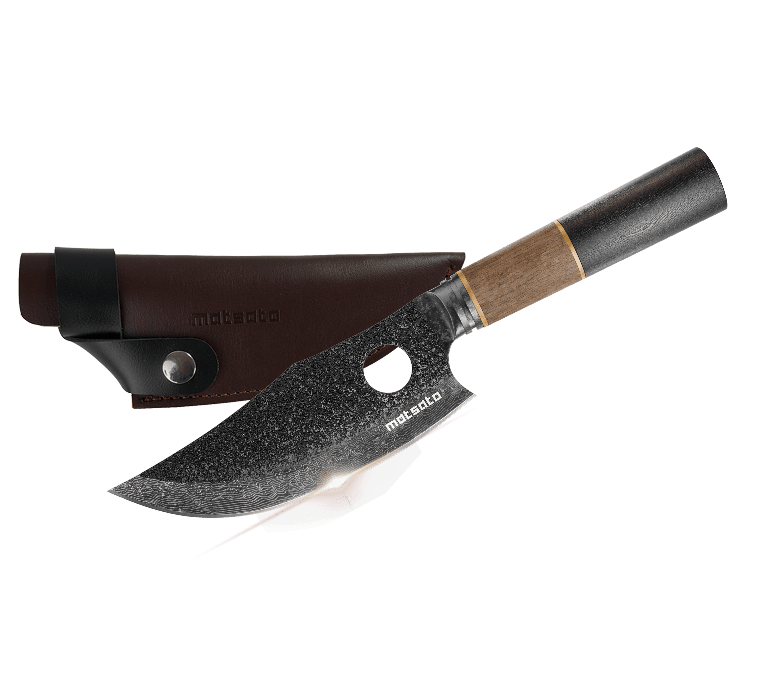 Matsato Osuren Chef Knife★★★★☆
Score 8.4/10 · very good
Price: from €24.99 per knife
1× €39.99 · 2× €64.98 · 3× €92.97 · 4× €99.96 plus shipping |
Fact sheet according to the vendor
|
Prices as shown in the official checkout for a delivery address in Germany (euros, excluding shipping), October 2026; the shop displays prices in the currency of your location. Reference prices and discount percentages are the vendor’s figures.
- What is the Matsato Osuren knife – and where are Matsato knives made?
- Why a dull knife makes cooking harder – what really matters in a chef’s knife
- Blade, steel, ice-hardening, handle: the technology check
- The finger hole: gimmick or genuine advantage?
- How we tested the Matsato knife
- Matsato Osuren in practice: vegetables, meat, fish, bread and four weeks of daily cooking
- What the Matsato knife can’t do – an honest list
- Our Matsato knife review rating in detail
- Matsato vs. classic chef’s knife, gyuto, santoku, cleaver and other finger-hole knives
- How to use, clean and sharpen the Matsato knife – step by step
- Who the Matsato Osuren is for – and who should skip it
- Matsato knife reviews and complaints: what customers report
- Is the Matsato knife legit? Company, support and guarantee
- Where to buy: Amazon, Walmart, Costco or the official website?
- Matsato knife price: packs, shipping, gift box and the 60-day guarantee
- Frequently asked questions (FAQ)
- Our verdict
What is the Matsato Osuren knife – and where are Matsato knives made?
Matsato is a kitchen-knife brand sold directly to consumers by UAB Domestica, a company based in Kaunas, Lithuania, through its own online shop. The brand became known online for its wide, Japanese-inspired chef knives, and “Matsato knife” is searched tens of thousands of times a month in the US, the UK, Canada and Australia alone. The Matsato Osuren is the model the official shop currently sells: a broad, slightly curved blade with a dark hammered finish, a precision hole for your index finger below the spine, and a slim, Japanese-style handle made of two woods – light acacia toward the blade, dark pakka wood toward the end. Our knife came in a dark brown leather sheath with a press-stud strap, and every order includes a free recipe book.
The vendor calls the Osuren a “santoku knife”. A classic santoku, though, has a fairly straight, slim blade; the Osuren is wider, has more belly and more weight up front – somewhere between a compact cleaver, a Serbian-style chef knife and a Japanese bunka. That is a matter of character, not a flaw: this shape is made for confident push cuts and chopping, less for delicate tip work. The product page promises ice-hardened stainless steel that keeps its edge, a balanced blade with a finger hole for control and a hardwood handle with a secure grip. All the details are on the official Matsato Osuren website; below we check how each promise held up on our cutting boards.
Where are Matsato knives made – Japan or China?
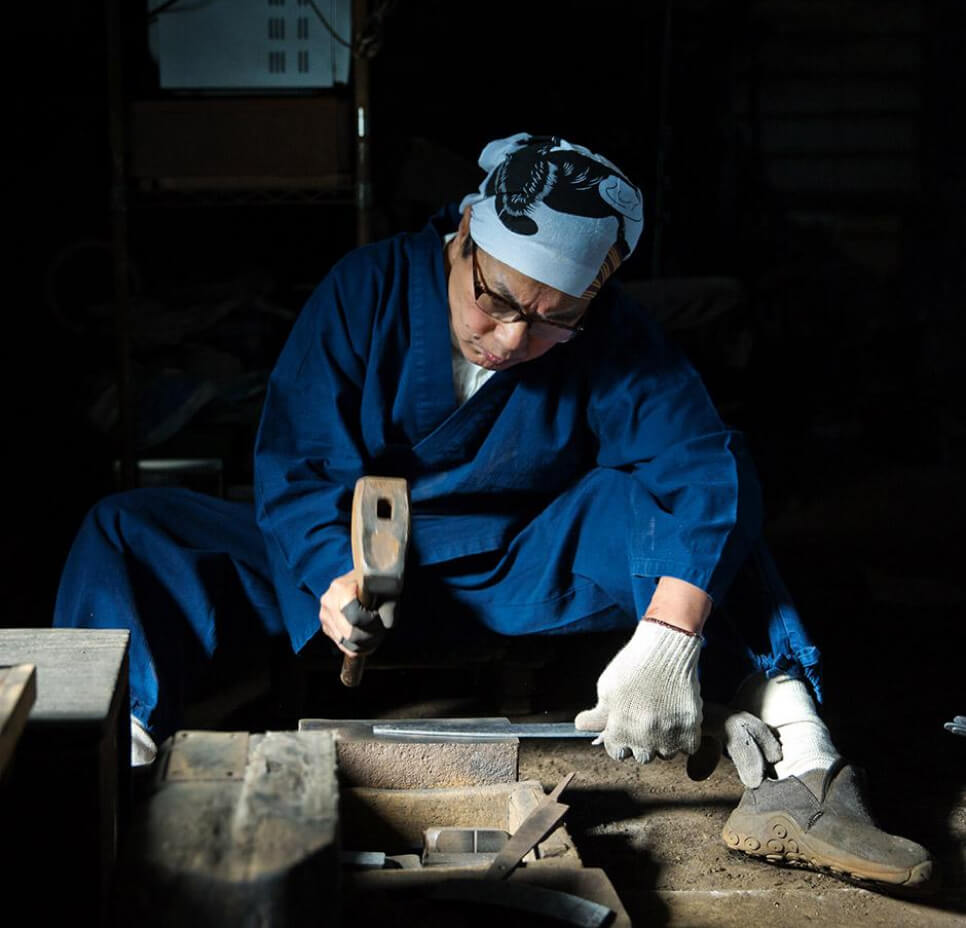
Forging, hardening, grinding: the vendor says the Osuren is “inspired by centuries-old Japanese knife making traditions” (symbolic image).
“Is the Matsato knife made in Japan?”, “Matsato knife made in China?” and “where are Matsato knives made?” are among the most common searches around the brand. The straight answer: according to the vendor, the Osuren is made in Asia and inspired by Japanese smithing tradition. The vendor doesn’t name the country of manufacture and doesn’t claim that the knife is forged in Japan. “Japanese” describes the design language – the hammered finish (tsuchime in Japanese), the round two-wood handle, the wide blade – not the origin, as with many knives in this price class. Genuine hand-forged knives from Seki or Sakai typically cost several times as much.
The vendor also speaks of “a 138-step design” and says each knife “goes through rigorous testing before every shipment”. We can’t audit that – but our test knife was cleanly finished: an even grind, no gap between blade and handle, a smoothly rounded spine.
Why a dull knife makes cooking harder – what really matters in a chef’s knife
A good chef’s knife is the single most important tool in a kitchen. And a dull knife is not only annoying but less safe: you need more force, the blade skids off the smooth skin of a tomato or a pepper – and that is when it ends up in a finger. Here are the criteria knife enthusiasts actually judge by, so your expectations are set right:
- Sharpness out of the box and edge retention: How fine is the factory edge, and how long does it last? That depends on the steel, its hardness (Rockwell scale, HRC) and the heat treatment. Harder steel stays sharp longer but is more brittle; softer steel is more forgiving but needs honing more often.
- Blade geometry: A thin edge glides through tomatoes; a wide blade lets you scoop up what you’ve cut; a curved belly suits chopping, a flatter profile push cuts and slicing.
- Grip, balance and build: Does the knife sit securely without tiring your hand? Is the transition between blade and handle seamless, the spine free of sharp edges?
An honest word on price: between a direct-to-consumer knife at €25 to €40 and a premium knife at several times that, there are real differences in steel and fine grinding. But for most home cooking, what counts is that the knife is sharp, sits well in your hand and is easy to keep sharp. That is the yardstick we used for the Matsato Osuren.
Blade, steel, ice-hardening, handle: the technology check
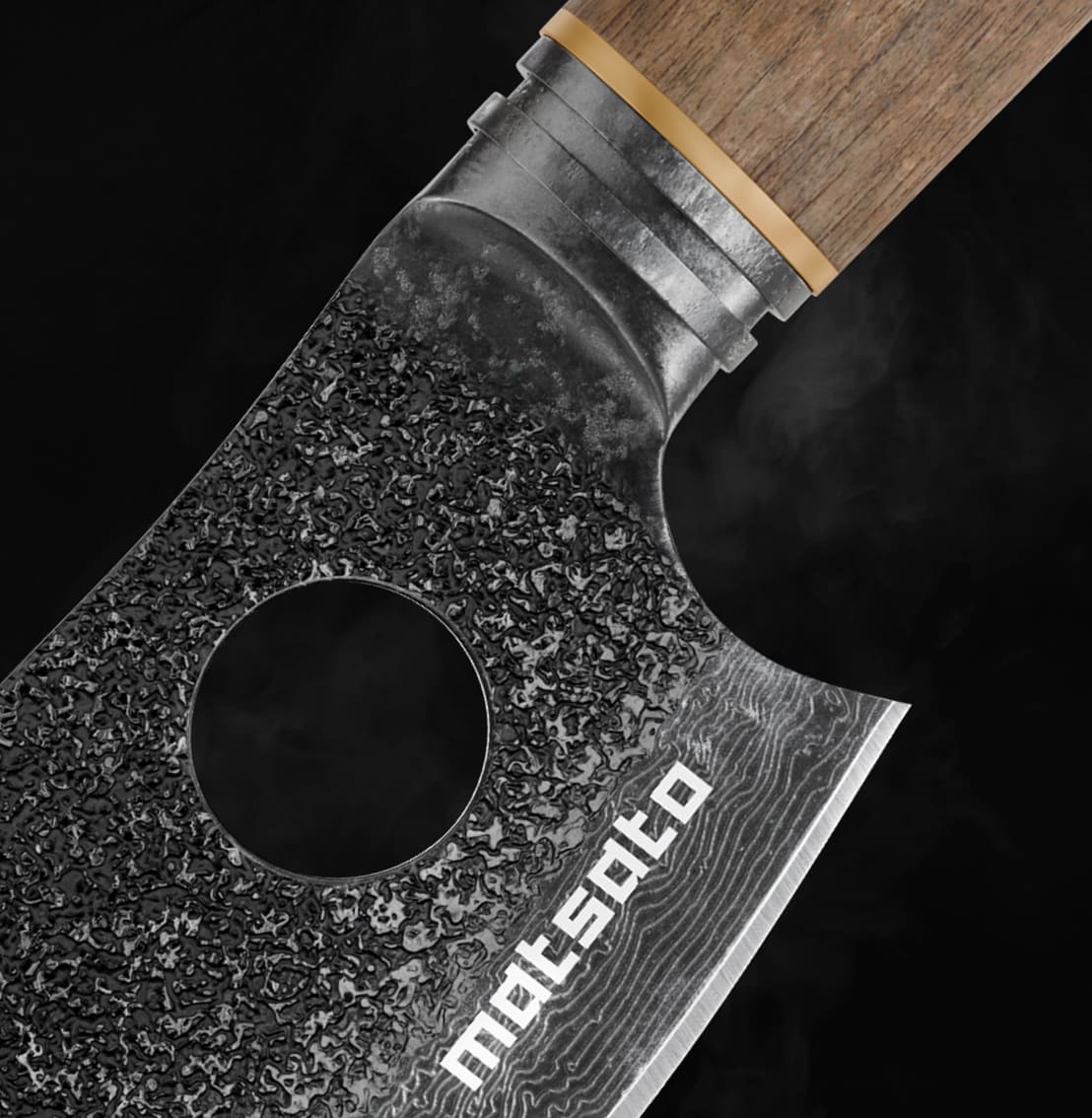
Hammered finish, finger hole, wide blade: the features that make the Matsato Osuren recognizable at a glance.
The vendor describes the Osuren with a handful of technical claims. We’ve set them against what we observed in four weeks of use:
| Feature | What the vendor says | Our assessment |
|---|---|---|
| Steel | “High-quality stainless steel”, “sturdy and sharp” – unlike knives “prone to chipping and oxidation” | No steel grade or hardness figure is given. In use, it behaved like a quality stainless kitchen steel of medium hardness: very sharp, easy to hone, no rust in four weeks – but not as long-lasting as the very hard steels of premium Japanese knives. |
| Ice-hardening | Steel is cooled below −100 °C (−148 °F) to form martensite; this “minimizes residual stresses” and “helps the blade retain its sharpness longer” | Sub-zero treatment is a well-established heat-treatment step, also used by renowned knife makers. We can’t verify the process from the outside; edge retention in our test was good for its class. |
| Hammered finish | Traditional Japanese-inspired design | Looks premium and creates tiny air pockets, so slices of potato or cucumber stick noticeably less. A finish, not Damascus layering – which the vendor doesn’t claim, either. |
| Blade shape | “Santoku”, unique blade with a precision finger hole | Wide, curved, with weight up front – closer to a compact cleaver than to a classic santoku. Excellent for push cuts, chopping and meat; less suited to fine tip work. Noticeably shorter than a classic 8-inch chef’s knife. |
| Handle | Pakka and acacia wood, “hard wood with a characteristic dark texture, creating a perfect grip” | Pakka wood is resin-stabilized layered wood – durable and a standard on many Asian-style knives; the acacia adds natural grain. Comfortable and secure, also with wet hands, cleanly fitted. Not for the dishwasher. |
| Finger hole | “For superior control and balance” | Not a gimmick – see the next section. It moves your hand forward toward the balance point and gives the index finger a fixed position. |
| Not stated | – | Steel grade, HRC, blade length, thickness, weight – our main criticism, as these figures belong on every knife’s product page. If you need them, ask support before you order. |
Ice-hardening: what cooling steel below −100 °C actually does
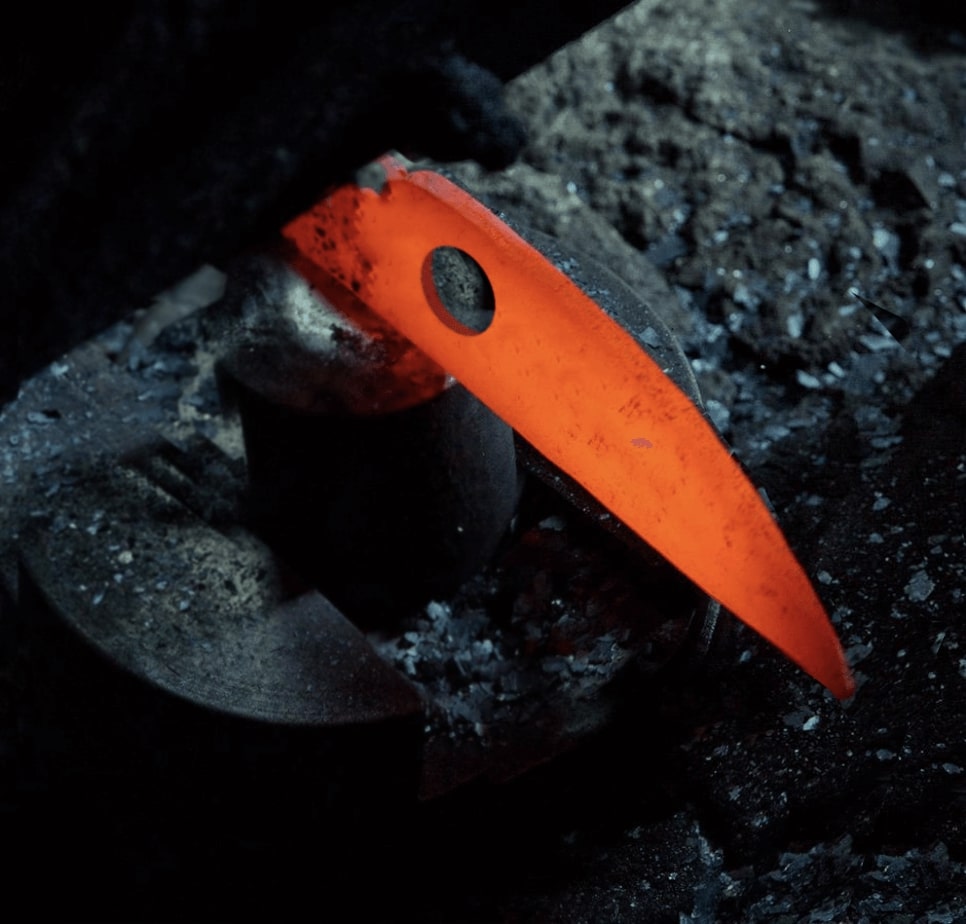
Heat first, then cold: ice-hardening is an extra step after the classic hardening of the blade (symbolic image).
“Ice hardened steel” is a term many cooks know from established European knife makers, and it is the core of the Matsato promise. When a blade is hardened, it is heated, then quenched, and its structure turns largely into martensite – the hard, fine-grained structure that holds a sharp edge. Cooling it far below freezing afterwards – the vendor says below −100 °C – converts more of the remaining softer structure and relieves internal stresses: in principle, a more uniform, more wear-resistant blade. What it can’t do is turn an ordinary steel into a high-end one – the alloy sets the ceiling. That matches what we saw: the Osuren kept its factory edge well for two weeks of daily use, then wanted a quick touch-up on the honing rod. Our verdict on the technology: a solidly made stainless chef knife with an attractive look and well thought-out ergonomics – not a hand-forged Japanese masterpiece, and it doesn’t pretend to be one.
The finger hole: gimmick or genuine advantage?
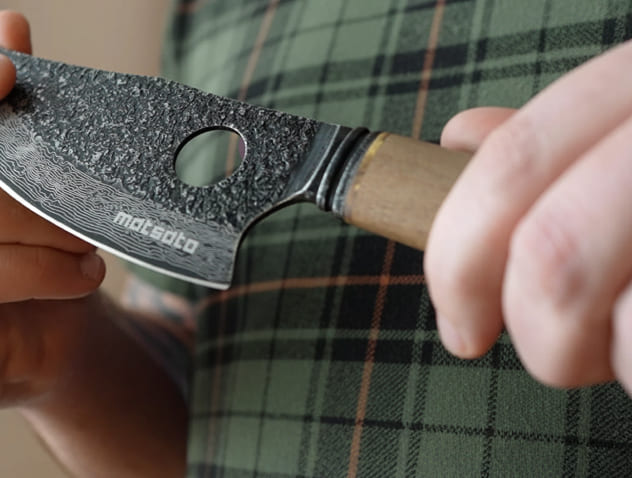
Index finger through the hole, thumb against the blade, remaining fingers around the handle – the grip the Osuren is designed for.
The hole in the blade is the Osuren’s most recognizable feature – and the first thing skeptics ask about. “What are knives with finger holes called?” and “how do you hold a knife with a finger hole?” are frequent searches. There is no single official name; you’ll see “finger-hole knife”, “finger-hole grip” or “finger loop”. On butcher’s cleavers, a hole near the spine is often for hanging the knife; on the Osuren, it is a grip feature that, according to the vendor, provides “superior control and balance”. This is how it works in practice:
- The index finger rests in the hole instead of on the spine. Instead of pinching the blade between thumb and curled index finger, you put the index finger through the hole, place your thumb on the opposite side and wrap the other fingers around the handle. Your hand moves forward, almost over the balance point.
- More control, less effort. With your hand closer to the edge, you steer the blade rather than push it – most noticeable with push cuts (onion, carrot, cabbage) and when chopping herbs.
- A secure hold with wet hands or less hand strength. The finger can’t slip forward. One of our testers, who has stiff, arthritic finger joints, found she could hold the Osuren longer and more securely than her usual chef’s knife – a comfort observation about grip, not a medical effect.
- The limits. For rocking the tip back and forth or for very fine julienne, the forward hand position takes getting used to. If you have used a pinch grip for years, give yourself two or three days. And when you dice onions, a little juice collects in the hole – a detail, not a problem.
Our verdict: not a gimmick. The finger hole is a real ergonomic idea that helps beginners, people with weaker hands and anyone who cuts vegetables and meat with some force. Even our most experienced tester found the guidance pleasant after a short time – and you can always use a classic grip instead.
How we tested the Matsato knife
We ordered the Osuren through the official shop like any customer and rated it on six criteria:
- Sharpness out of the box: paper test (a sheet of newspaper cut in mid-air), tomato test (slicing through the skin without pressure).
- Cutting performance: tomatoes, onions, bell peppers, carrots, cabbage, herbs, butternut squash; beef, chicken breast, ribs (between the bones, never through them); a whole sea bream and a salmon fillet; a crusty loaf and soft sandwich bread.
- Grip, balance and ergonomics: with the finger hole and with a classic grip, fatigue after 30 minutes of prep, wet hands, small and large hands.
- Build quality: transition between blade and handle, spine, finish of the grind and the finger hole, quality of the sheath.
- Edge retention and care: sharpness after one, two, three and four weeks of daily use; honing on a steel rod, sharpening on a whetstone; any sign of rust; the wooden handle after weeks of hand washing.
- Value for money and vendor: price per knife in the real checkout, transparency of the product information, company details, shipping, returns and support.
The test team: three home cooks in two households over four weeks – a hobby cook with a collection of Japanese knives, an everyday cook used to a budget knife-block set, and a tester with stiff finger joints. Prices and conditions were checked in the official order process.
Matsato Osuren in practice: vegetables, meat, fish, bread and four weeks of daily cooking
Unboxing and first impression
The knife arrived in a plain box (the black gift box with magnetic closure is an option in the checkout), the blade tucked into a dark brown leather sheath with a press-stud strap and an embossed Matsato logo. First impression: more substantial and upmarket than we expected at this price. The hammered blade has a matte, dark sheen, the transition to the two-tone handle is seamless, the spine is smoothly rounded and the finger hole is cleanly deburred. Then the paper test: a sheet of newspaper held in the air, the blade drawn through it – a clean cut, no tearing. Out of the box, the Osuren is as sharp as promised.
Vegetables: tomato, onion, peppers, cabbage, herbs

The classic sharpness test: the Osuren glided through the tomato skin without pressure.
The tomato exposes every dull knife. The Osuren went through the skin without downward pressure and produced slices thin enough to see the board through. With the finger-hole grip, onions could be diced very precisely, and the wide blade made it easy to scoop up the pieces. Bell peppers and chilies: clean cuts, no crushing. With white cabbage, the curved, heavy blade showed its real strength – one confident push cut and half a head was in strips, clearly better than the slim santoku from our hobby cook’s collection. Carrots and a butternut squash were just as easy, as long as we pushed straight down instead of twisting the blade. Rock-chopping herbs works, but with the shorter, curved blade you chop in small portions. A real bonus of the hammered finish: cucumber and potato slices stuck noticeably less than to our smooth-bladed comparison knives.
Meat: steak, chicken, ribs
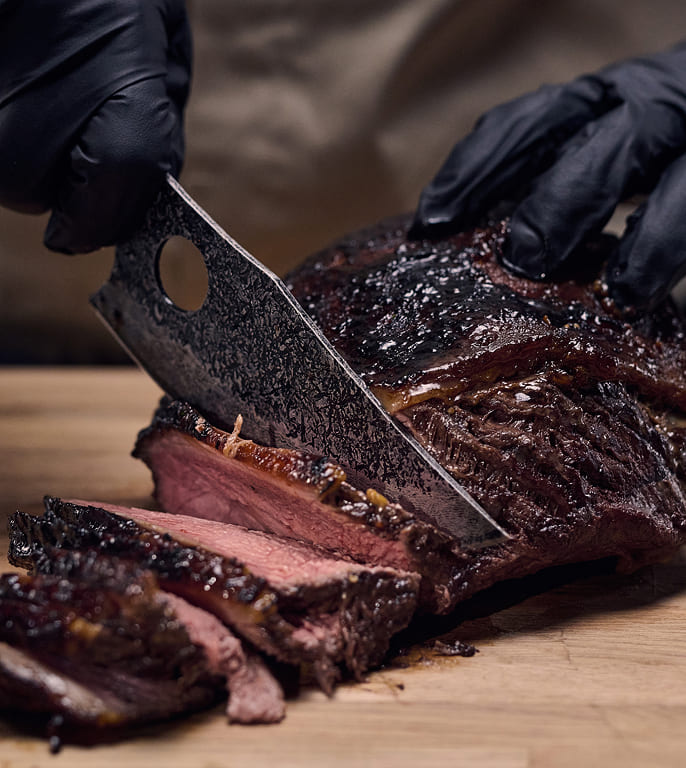
Clean slices without tearing: the weight of the blade helps with steaks, roasts and grilled meat.
Sirloin cut into strips for a stir-fry, chicken breast diced, a steak sliced at the table, grilled ribs separated between the bones – the Osuren cut cleanly without tearing the fibers, and the weight of the blade helped with sinew and skin. Trimming fat and silver skin worked well thanks to the forward hand position. What we deliberately didn’t do: chop through bones or frozen meat – a job for a heavy meat cleaver, and the fastest way to chip any fine edge. For anyone searching for a “Matsato chef knife for cutting and boning”: for portioning and trimming, yes; for real boning work, a narrow, flexible boning knife is the better tool.
Fish: whole sea bream and salmon fillet
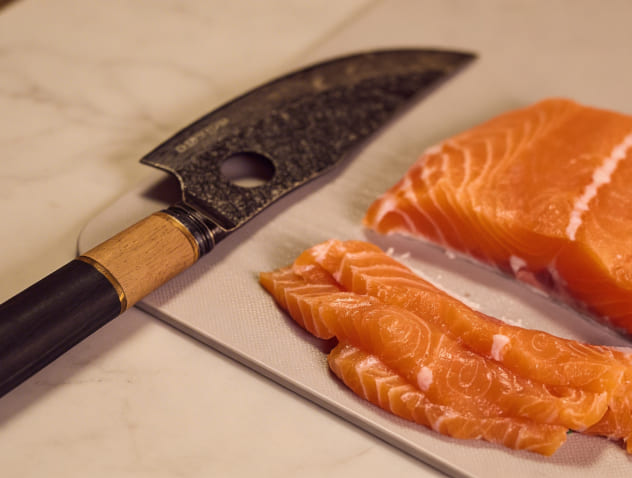
Salmon portions in one long pull – for paper-thin skin removal, a flexible filleting knife stays the specialist.
With a whole sea bream, the head came off with one firm chop, and the curved blade worked well for lifting the fillets off the bone; for removing the skin, our hobby cook still reached for a flexible filleting knife. Salmon cut into portions and thin slices: good, as long as you cut in one long pull instead of sawing – clean, though not quite as glassy-smooth as with a long Japanese slicing knife.
Bread and other tasks
Bread is the one test where a straight edge always gives way to a serrated one. A crusty sourdough loaf: the Osuren got through with a slow sawing motion, but the crust splintered more and the slices were less even than with our serrated bread knife. Soft sandwich bread: the wide blade compressed the crumb a little. Cheese, on the other hand, was a pleasure – hard cheese in thin slices, semi-soft cheese without sticking. Our tip: use the Osuren for everything on the board, and keep a simple serrated knife for bread.
Comfort, balance and fatigue
The balance point sits just in front of the handle, right around the finger hole. With your index finger in the hole, the knife feels lighter than it is and very direct. After 30 minutes of chopping vegetables for a big pot of soup, none of us felt fatigue in the wrist or fingers. The everyday cook needed two days before the finger-hole grip became second nature – and then didn’t want to go back to her block-set knife. The hobby cook switched between finger hole and pinch grip depending on the task. Our tester with stiff finger joints called the Osuren the first knife in a long time she could comfortably use for the whole prep of a family meal. With wet hands, the handle stayed secure.
Edge retention over four weeks, honing and care
After one week of daily use, the Osuren still sliced tomatoes without pressure; after two weeks, it needed a slight pull through the skin; after roughly three weeks, it was time for the honing rod – five strokes per side, and the sharpness was back. After four weeks, we sharpened it on a whetstone (1000 grit, then 3000): the steel quickly takes a fine edge – a sign of medium hardness and good news for beginners, because you need no special skills to keep it sharp. No rust appeared, even when onion juice was occasionally left on the blade, and the handle looked better, if anything, after weeks of hand washing and a drop of oil. The dishwasher we deliberately skipped.
The Matsato Osuren is a sharp, substantial, very comfortable all-purpose knife for vegetables, meat and fish whose finger hole does more than look good in an ad. It shines at push cuts and chopping, and the hammered finish genuinely reduces sticking. It doesn’t replace a bread or filleting knife, and a few strokes on the honing rod every three to four weeks keep it at its best. For a home kitchen that wants one sharp, enjoyable knife, it delivers – at excellent value in the multi-packs.
What the Matsato knife can’t do – an honest list
A good score needs clear limits. Here is what you should know before you order:
- It isn’t a knife made in Japan. “Inspired by centuries-old Japanese knife making traditions” describes the design, not the origin – according to the vendor, the knife is made in Asia. A hand-forged knife from Seki or Sakai costs several times as much.
- No technical data. Steel grade, hardness in HRC, blade length, thickness and weight are not on the product page – unusual for a knife and our main criticism, especially as the knife itself has nothing to hide.
- Not Damascus, not a santoku in the strict sense. The hammered texture is a finish on a single steel; the shape is a curved, compact cleaver-style blade with a finger hole. Both are fine as long as you know it.
- Edge retention is solid, not exceptional. With daily use, the Osuren needs honing every three to four weeks. Very hard Japanese steels last longer – but they are more brittle, harder to sharpen and far more expensive.
- Not the knife for every job. Bread, delicate filleting, boning and fine tip work are better done with specialist knives; bones and frozen food shouldn’t be chopped with any fine edge. Rock-chopping also feels different with the shorter, curved blade – most of our testers adapted within days.
- Shipping time. Delivery takes around 8–12 business days to the US and UK, 10–14 to Australia and 12–18 to Canada, plus 1–2 days of processing; import duties or taxes are possible outside the EU.
None of this speaks against the knife – these are the normal limits of a direct-to-consumer chef’s knife in this price class. Within them, the Osuren convinced us, above all in sharpness, ergonomics and value for money.
Our Matsato knife review rating in detail
What speaks for the Matsato Osuren
|
What you should know
|
The deductions are for edge retention in the normal range for stainless steel, the missing technical data and the shipping time overseas – not for sharpness, ergonomics or build quality. Among the chef’s knives in this price range that we have used, the Matsato Osuren is one of the most enjoyable.
Matsato vs. classic chef’s knife, gyuto, santoku, cleaver and other finger-hole knives
“Best chef knife for home cooks”, “best Japanese kitchen knife”, “chef knife vs santoku” – most people want one knife that does almost everything. This is how the Osuren compares with the typical alternatives, based on our test and general knife knowledge:
| Knife type | Strengths | Trade-offs | Our take |
|---|---|---|---|
| Matsato Osuren | Very sharp out of the box, finger-hole ergonomics, substantial all-purpose blade, hammered finish, leather sheath | No published steel or hardness data, medium edge retention, available online only | The most character per euro in this comparison – ideal for home cooks who want a sharp, confident all-rounder. |
| Classic Western chef’s knife (8-inch, German-style) | Defined steel, long blade for rock-chopping, available everywhere, often long warranties | More conservative factory edge, heavier bolster, typically pricier per knife from big brands | The all-round standard. Better for rocking and long slicing; the Osuren is better for push cuts and control. |
| Japanese gyuto / santoku (hard steel) | Very hard core steel, outstanding edge retention, thin and precise blade | More brittle (no bones, no twisting), demands careful sharpening, typically several times the price | For enthusiasts who sharpen on stones. The Osuren is more forgiving and much cheaper. |
| Chinese cleaver / Serbian-style chef knife | Wide, heavy blade, great for chopping and scooping, often robust | Can be very heavy, some versions in carbon steel that rusts, no finger hole | Similar idea to the Osuren in blade shape; the Osuren is more compact and has the finger-hole grip. |
| Budget knife-block set | Many knives for little money, a bread knife included | Often soft steel and a weak factory edge that dulls quickly, mediocre handles | One good knife beats five average ones – the Osuren plus a bread knife covers most needs. |
| Other finger-hole knives sold online | Same product idea, similar look, also often sold in multi-packs | Specifications are often just as sparse; steel and finish vary from brand to brand | Compare what is included: sheath, handle, stated heat treatment, guarantee – the Osuren is well equipped on all four. |
Our conclusion: for maximum edge retention, a hard-steel Japanese gyuto is the enthusiast’s choice – at several times the price; for the sober all-round standard, a classic Western chef’s knife. The Matsato Osuren sits in between as the knife with the most personality for the money: substantial, sharp, good-looking, with an ergonomic idea that genuinely helps.
How to use, clean and sharpen the Matsato knife – step by step
A sharp knife stays sharp longer if you use and care for it the right way. These routines worked best for us – including the answers to “is the Matsato knife dishwasher safe?” and “how do I use a Matsato knife sharpener?”:
- Find your grip. Index finger through the hole, thumb on the opposite side of the blade, remaining fingers around the handle – or a classic pinch grip just in front of the handle. Try both for two or three days before you decide.
- Push and chop rather than rock. The curved, wide blade loves a straight push cut and confident chopping. To rock-chop herbs, roll the belly of the blade in short movements and work in small portions.
- Use the right cutting board. Wood or plastic – never glass, stone, marble or ceramic, which ruin any edge in days.
- No bones, no frozen food, no prying. Push straight through hard vegetables such as squash instead of twisting. For bones and frozen blocks, use a heavy meat cleaver.
- Hand wash and dry immediately. In our book, the Matsato knife is not dishwasher safe: heat, harsh detergent and rattling against other items swell the wooden handle and dull the edge. Rinse with warm water and a little dish soap, dry right away, and don’t let acidic juices dry on the blade.
- Hone weekly, sharpen every few months. Five to ten light strokes per side on a steel or ceramic honing rod realign the edge. When the knife fails the tomato test even after honing, sharpen it on a whetstone (1000 grit, then 3000) at roughly 15–20 degrees. A quality pull-through or rolling sharpener also works – use it gently and follow its instructions.
- Oil and store. A drop of food-safe mineral oil every few months keeps the acacia supple. Store the knife in its sheath, on a magnetic strip or in a block – never loose in a drawer – and out of the reach of children.
The tomato test is the best everyday sharpness check: draw the blade back over a ripe tomato without pressure – it should glide through the skin. As soon as you have to press, reach for the honing rod.
Who the Matsato Osuren is for – and who should skip it
The Matsato Osuren makes sense for you if:
- You are a home cook looking for a sharp, characterful all-purpose knife for vegetables, meat and fish – without spending triple digits.
- You are a beginner who has struggled with dull block-set knives and wants a forgiving knife that is fun to use.
- Your hands are weaker, stiffer or tire quickly, and a secure grip matters to you – in our test, the most convincing use case.
- You grill or camp and want a robust knife with a sheath.
- You are looking for a gift – with gift box and recipe book, the Osuren impresses, and the 3- or 4-pack covers several people.
You can skip it if:
- You sharpen hard-steel Japanese knives on stones – you’ll miss the extra edge retention and the fine tip.
- You want one knife for bread, filleting and boning as well – no chef’s knife does all of that.
- Your knives have to go in the dishwasher, or you need published steel specifications.
- You need a knife by tomorrow – delivery takes around two weeks.
Matsato knife sheath and the law: carrying a kitchen knife outside the home
The leather sheath protects the edge in the drawer and lets you pack the knife safely for a picnic, a barbecue or a camping trip – it is not meant for carrying the knife around in public. In many countries, carrying a fixed-blade knife in public is restricted: in the UK, for example, not without a good reason, and US states, Canadian provinces and Australian states each have their own rules. Pack it in the sheath, transport it in a bag for a clear purpose and check your local rules. This is general information, not legal advice.
Matsato knife reviews and complaints: what customers report
“Matsato knife reviews and complaints”, “Matsato knife Reddit”, “Matsato knife Trustpilot” – many people look for feedback before they order. The product page shows 4.4 stars “(16K+ Reviews)” and speaks of “more than 1 million satisfied customers”; it also publishes dated testimonials from 2026, with a few more on the order page (from Gilbert and Thomas, for example). These are vendor-published figures and quotes we can’t verify independently. What we can do is compare their themes with our own four weeks:
| What customers say (vendor-published testimonials) | Does it match our test? |
|---|---|
| Stephen: the knife is “cutting thru everything it touches including my finger. Caution as they’re very sharp!” | Yes – the sharpness is real. Respect the edge in the first days; the finger-hole grip helps keep your hand in place. |
| Diana: it can “slice thin pieces of tomato and onion, and yet works well to cut through beef” | Exactly our experience: paper-thin tomato slices and clean cuts through beef. |
| Robin: “lightweight but very sturdy” | Partly: we found the blade pleasantly substantial – but with the finger in the hole, it does feel lighter than it is. Sturdy, yes. |
| Josie: “My hands are swollen and inflexible and this knife is easy for me to manage” | Matches our tester with stiff finger joints, who found the Osuren easier to hold through a whole meal prep than her usual knife. |
| Daniel “kept one and gave the others as gifts”; Laura “ordered 4 more” | Plausible – it looks great in its sheath and gift box, and multi-packs lower the price per knife. |
| Typical criticism of knives in this category: “not really Japanese”, “needs sharpening after a few weeks”, “delivery took longer than expected”, “no steel specifications” | All apply to the Osuren, too – see our limits list. None changed our positive verdict. |
The pattern in positive feedback is consistent: impressive sharpness, a secure grip with the finger hole, a premium look, a popular gift. The pattern in complaints about this type of knife is equally consistent: expectations of a genuine Japanese knife, an edge that eventually needs honing, delivery times and missing technical data. Know both going in, and you are very unlikely to be disappointed. For those searching “Matsato knife reviews Consumer Reports”: we are not aware of any test of the Matsato Osuren by Consumer Reports, Which?, CHOICE or a comparable consumer organization. Our score is based on our own four-week practical test.
Is the Matsato knife legit? Company, support and guarantee
“Is the Matsato knife legit?” is a natural question about any brand that sells online. The official shop is operated by UAB Domestica, a limited company registered in Lithuania (EU) at Gedimino g. 45-7, LT-44239 Kaunas, company registration number 307174704, VAT number LT100018934013. The shop publishes terms and conditions, a shipping policy and a returns policy. Customer service is available by email at support@matsato-osuren.com, through a contact form and by phone on +49 800 400 9820 (a German freephone number), plus an order-tracking page.
The checkout shows “Ships fast · 60-Day Risk Free Money Back Guarantee · Secure Checkout”, and payment runs through established methods: express checkout, credit or debit card, Klarna and Apple Pay. The 60-day guarantee is written down in the returns policy (details below). Most importantly, the knife itself is real, arrived well packaged and was exactly as sharp as advertised. In short: a registered EU company with transparent details, reachable support and written policies, selling a knife that performed very well in our test. Legit.
Where to buy: Amazon, Walmart, Costco or the official website?
“Matsato knife Amazon”, “Matsato knife Walmart”, “Matsato knife Costco”, “Matsato knife eBay” and “Matsato knife where to buy” are among the most frequent searches. The answer is simple: the Matsato Osuren is “available online only” through its official shop. It isn’t sold by the vendor on Amazon (including Amazon UK, Amazon.ca and Prime), Walmart, Target, Costco or eBay, and you won’t find it in stores such as John Lewis, Argos or Lakeland. Similar-looking finger-hole knives on marketplaces, offered under various names and in varying quality, are not the vendor’s.
The direct-to-consumer model has clear advantages for you:
- No retail markup: no wholesaler or store margin on top – that is how the price gets down to €24.99 per knife in the 4-pack.
- Quality control from one source: according to the vendor, every knife is tested before shipment, and you get exactly the model described – with sheath and recipe book.
- The 60-day guarantee: it applies to orders from the official shop, handled by the company that ships the knife.
- Pack prices and gift box: the tiered multi-pack prices and the optional gift box are available there.
Our recommendation: order the Matsato Osuren directly through the official Matsato shop, where you’ll also find the policies and support contacts.
Matsato knife price: packs, shipping, gift box and the 60-day guarantee
We went through the real order process: the “Get up to −70% discount” button on the product page leads to the order page with four packs – all one-time purchases, no subscription. These are the prices we saw in October 2026 for a German delivery address, in euros. The checkout shows prices in your local currency (dollars or pounds in the US, UK, Canada or Australia); our euro figures are the reference:
| Pack | Price | Per knife | Reference price (vendor) | Good for |
|---|---|---|---|---|
| 1 knife | €39.99 | €39.99 | €83.99, “−52%” | Trying it out |
| 2 knives | €64.98 | €32.49 | €167.98, “−61%” | One for your kitchen, one as a gift |
| 3 knives | €92.97 | €30.99 | €251.97, “−63%” | Kitchen, grill and a gift |
| 4 knives (“Most popular”) | €99.96 | €24.99 | €335.96, “−70%” | Families, several gifts, best price per knife |
Plus €9.95 standard shipping. The €24.99 in the product page headline (“Only €24.99 vs €83.99 retail”) is the price per knife in the 4-pack. Per-unit math with shipping included: a single knife comes to €49.94; the 2-pack to €74.93 (about €37.47 per knife); the 3-pack to €102.92 (about €34.31 per knife); the 4-pack to €109.91, or about €27.48 per knife. Compared with four single knives (4 × €39.99 = €159.96), the 4-pack saves €60. The optional premium gift box with magnetic closure costs €3.45 per knife – a nice touch for a present. The recipe book comes free with every order, and the vendor offers 10% off your first order for newsletter sign-ups.
Our tip: the single knife is a fair price for what you get. But a second Osuren always finds a use – for the grill, the holiday home or as a gift – and from the 2-pack onward the price per knife drops noticeably. With the 60-day guarantee, the bigger pack carries little extra risk.
- Payment: express checkout, credit or debit card, Klarna (in our German checkout: invoice, installments or pay now) and Apple Pay. One-time purchase, no subscription.
- Shipping: processing 1–2 business days; delivery in business days: United States 8–12, United Kingdom 8–12, Australia 10–14, Canada 12–18, Ireland 12–15, with tracking. Outside the EU – including the US, UK, Canada and Australia – import duties or taxes may apply.
- 60-day returns: within 14 days of delivery, a full refund including the original delivery fee; from day 15 to day 60, the product price. Return shipping is paid by the buyer. Contact support first for a return authorization (RMA, reply within 3 business days) and send the knife back in its original packaging – so keep it during the trial period; the refund follows within 14 days of receipt.
- Support: support@matsato-osuren.com, contact form, phone +49 800 400 9820, order tracking page; UAB Domestica, Kaunas, Lithuania, company number 307174704.
Frequently asked questions about the Matsato knife
Is the Matsato knife any good?
Yes. In our four-week test, the Matsato Osuren was razor-sharp out of the box, cut tomatoes, onions, cabbage, meat and fish cleanly and sat very securely in the hand thanks to the finger hole. With daily use, a few strokes on the honing rod every three to four weeks keep it at its best. Our score: 8.4/10, very good.
Is the Matsato knife legit or a scam?
Legit. The official shop is run by UAB Domestica, a registered company in Kaunas, Lithuania (company number 307174704, VAT number LT100018934013), with published policies, email and phone support and order tracking. Our test knife arrived as described and performed as advertised.
Where are Matsato knives made – is the Matsato knife Japanese or Damascus?
According to the vendor, the Osuren is made in Asia and “inspired by centuries-old Japanese knife making traditions”. The design is Japanese-inspired; the knife is not made in Japan, and the vendor doesn’t claim it is. The hammered texture is a surface finish, not Damascus layering.
What is the finger hole in the Matsato knife for?
For your index finger. With the finger through the hole and your thumb on the other side of the blade, your hand sits near the balance point and guides the knife precisely without slipping – helpful for beginners and anyone with weaker or stiff hands. A classic grip works too.
What steel is the Matsato knife made of – and how long is the blade?
The vendor says “high-quality stainless steel”, ice-hardened below −100 °C (−148 °F); steel grade, hardness (HRC), blade length and weight are not stated. In our test, it behaved like a quality stainless steel of medium hardness: very sharp, easy to sharpen, no rust. The blade is noticeably shorter than a classic 8-inch chef’s knife.
Is the Matsato knife dishwasher safe?
We strongly recommend hand washing: the wooden handle doesn’t like the heat and moisture of a dishwasher, and the edge dulls faster when it rattles against other items. Rinse, dry immediately, oil the handle now and then.
How do I sharpen the Matsato knife?
Hone it weekly with five to ten light strokes per side on a honing rod; when the tomato test fails even after honing, use a whetstone (1000 grit, then 3000) at roughly 15–20 degrees. A quality pull-through or rolling sharpener is a simple alternative. The offer we checked doesn’t include a Matsato sharpener – any good sharpener works.
Does the Matsato knife come with a sheath?
Yes – a dark brown leather sheath with a press-stud strap and the Matsato logo. It protects the edge in the drawer and on a camping trip; it isn’t meant for carrying the knife in public.
How much does the Matsato knife cost in the US, UK, Canada and Australia?
In the official shop (October 2026, in euros for a German address): 1 knife €39.99, 2 knives €64.98, 3 knives €92.97, 4 knives €99.96 (€24.99 each) – plus €9.95 standard shipping; gift box €3.45 per knife. The checkout shows prices in your local currency. One-time purchase, no subscription.
Is there a Matsato knife set?
The “set” is a multi-pack of the same knife: 2, 3 or 4 Osuren knives at a lower price per knife – down to €24.99 each in the 4-pack. Ideal for a family or as gifts.
Can I buy the Matsato knife on Amazon, Walmart or Costco?
No. The Osuren is “available online only” through its official shop – not from the vendor on Amazon, Walmart, Target, Costco or eBay, or in stores such as John Lewis or Argos. The 60-day guarantee applies to orders from the official shop.
Matsato vs. Huusk – which is better?
Both are direct-to-consumer kitchen knives with a wide blade and a finger hole. We haven’t compared them side by side, so we won’t declare a winner. The Osuren offers, according to its vendor, ice-hardened stainless steel, a hammered finish, a pakka and acacia handle, a leather sheath, a recipe book and a 60-day guarantee – compare blade shape, handle, what’s included and guarantee terms.
How long does delivery take?
Processing takes 1–2 business days; delivery estimates in business days: United States 8–12, United Kingdom 8–12, Australia 10–14, Canada 12–18, Ireland 12–15 – with tracking. Outside the EU, import duties or taxes may apply.
How does the 60-day money-back guarantee work?
Contact support for a return authorization (reply within 3 business days), then send the knife back in its original packaging. Within 14 days of delivery you get the full price including the original delivery fee back; from day 15 to day 60, the product price. Return shipping is paid by the buyer; the refund follows within 14 days of receipt.
Matsato knife review: our verdict
The Matsato Osuren keeps the promises that matter most in a kitchen. It is razor-sharp out of the box, sits substantially and securely in the hand, and the index-finger hole is a genuine ergonomic idea that noticeably helped all three of our testers. Tomatoes, onions, cabbage, squash, steaks, chicken and fish – the curved, hammered blade handled them all with confidence, the build quality is clean and the leather sheath a welcome extra. Add a free recipe book, a registered EU vendor and 60 days to change your mind, and you have one of the most enjoyable chef’s knives in its price class. Score 8.4/10 – very good.
To be fair: it is a stainless knife of medium hardness made in Asia, not a Japanese masterpiece; with daily use it wants the honing rod every three to four weeks; steel grade and blade length aren’t published; and delivery overseas takes around two weeks. If you want a sharp, good-looking all-purpose knife that is easy to keep sharp – ideally in a multi-pack from €24.99 per knife – the Matsato Osuren is, in our experience, an excellent choice.
Transparency notice: This article contains affiliate links. If you order through one of these links, we receive a commission – the price for you does not change, and our rating is not influenced by it. Information on materials, ice-hardening, production, customer numbers and reviews comes from the vendor. Huusk and other brands mentioned are trademarks of their respective owners and are named for comparison only. Notes on carrying knives are general information, not legal advice. Store sharp knives out of the reach of children. Prices and discounts as shown in the vendor’s shop in October 2026 for a delivery address in Germany, displayed in euros; the shop shows prices in your local currency; subject to change.

- Ondrela Review 2026: Is the Ondrela Tracker Card Legit? Real-World Test, Pros & Cons - 27. October 2026
- Wellaray Coffee Booster Reviews 2026: Does the Slim Coffee Booster Work? Ingredients, Side Effects & Price - 27. October 2026
- Matsato Knife Review 2026: Is the Osuren Chef Knife With the Finger Hole Worth It? - 27. October 2026


